
Limity modelů v debatě o velkomoravských centrech
Pohled z východu
DOI:
https://doi.org/10.35686/AR.2026.356Klíčová slova:
raný středověk, Velká Morava, ekonomika, centrální místa, trhAbstrakt
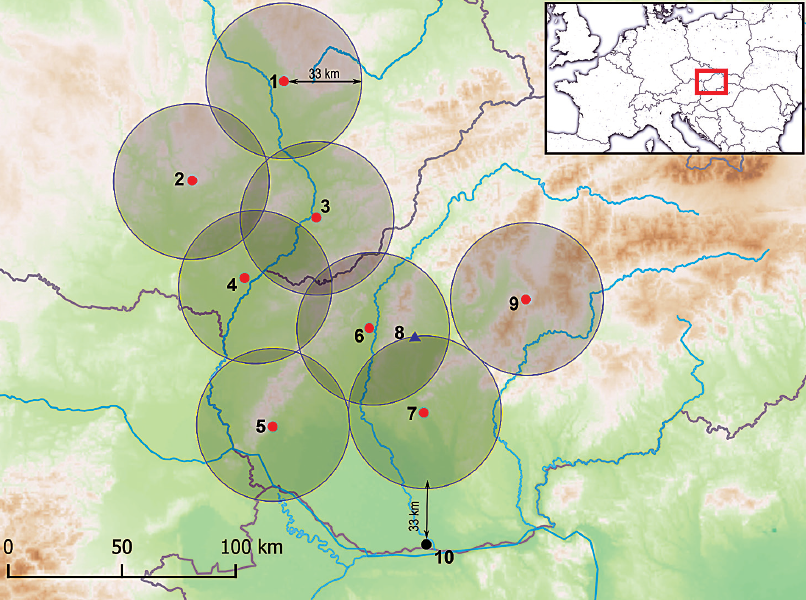
Článek se zabývá limity stávajících modelů používaných k interpretaci fungování velkomoravských center na příkladu lokality Bojná-Valy na západním Slovensku. Zatímco dosavadní diskuse se strukturovala kolem trojice modelů Jiřího Macháčka (agrární zázemí, autarkie a lokální trh), kriticky revidovaných Michalem Hlavicou, tato studie ukazuje, že při aplikaci na nestandardní lokality jsou takové interpretační rámce nedostatečné. Na Bojnou-Valy, postrádající jednoznačně identifikovatelné sídelní zázemí a vykazující výrazné vojenské a logistické charakteristiky, nelze plně aplikovat žádný z těchto modelů. Lokalita je proto interpretována jako specializovaný uzel kontroly a zásobování, kombinující institucionální redistribuci, strategické řízení zdrojů a omezenou segmentární směnu. Tento případ poukazuje na souběžnou existenci různých ekonomických mechanismů a zdůrazňuje potřebu rozlišovat mezi tržní směnou jako systémovou integrační silou a tržní směnou jako sekundárním produktem logistiky a kontroly. V obecnější rovině příspěvek naznačuje, že velkomoravský systém byl hierarchický, síťově propojený a funkčně diferencovaný, a vyžaduje proto flexibilnější interpretační modely překračující rigidní dichotomie.
Stažení
Reference
Abels, R. P. 1988: Lordship and Military Obligation in Anglo-Saxon England. Los Angeles – London: Berkeley.
Bachrach, B. S. – Aris, R. 1990: Military Technology and Garrison Organization: Some Observations on Anglo-Saxon Military Thinking in Light of the Burghal Hidage. Technology and Culture 31, 1–17. DOI: https://doi.org/10.1353/tech.1990.0088
Barta, P. – Hajnalová, M. – Látková, M. 2014: Radiocarbon dating of plant macroremains from river channel at PL 93 in Mikulčice and its implication for reconstruction of sediment deposition processes. In: L. Poláček (ed.), Mikulčice River Archaeology. New Interdisciplinary Research into Bridge No. 1. Internationale Tagungen in Mikulčice X. Brno: Institute of Archaeology of the Academy of Sciences of the Czech Republic, Brno, 113–116.
Bialeková, D. 1982: Slovanské pohrebisko v Závade. Slovenská archeológia 30, 123–164.
Bird, J. H. 1973: Of Central Places, Cities and Seaports. Geography 58, 105–118.
Borzová, Z. – Pieta, K. – Jakubčinová, M. 2020: Bojná 3. Poľnohospodárske náradie z hradiska Valy a jeho zázemia. Nitra: Archeologický ústav SAV.
Burghardt, A. F. 1971: A Hypothesis about Gateway Cities. Annals of the Association of American Geographers 61, 269–285. DOI: https://doi.org/10.1111/j.1467-8306.1971.tb00782.x
Christaller, W. 1966: Central Places in Southern Germany. Englewood Cliffs: Prentice-Hall.
Dresler, P. – Humlová, B. – Macháček, J. – Rybníček, M. – Škojec, J. – Vrbová-Dvorská, J. 2010: Dendrochronologické datování raně středověké aglomerace na Pohansku u Břeclavi. In: Š. Ungerman – R. Přichystalová – M. Šulc – J. Krejsová (eds.), Zaměřeno na středověk. Zdeňkovi Měřínskému k 60. narozeninám. Praha: Nakladatelství Lidové noviny, 112–138.
Dresler, P. 2016: Břeclav-Pohansko VIII. Hospodářské zázemí centra nebo jen osady v blízkosti centra? Brno: Masarykova univerzita.
Evans, S. T. 1980: Spatial Analysis of Basin of Mexico Settlement. Problems with the Use of the Central Place Model. American Antiquity 45, 866–875. DOI: https://doi.org/10.2307/280157
Galuška, L. – Mitáček, J. – Nývltová Fišáková, M. 2018: Uherské Hradiště – Sady: from a Great Moravian Sacral Centre to the Largest Church Necropolis of the Ducal Period in Moravia. In: P. Kouřil – R. Procházka (eds.), Moravian and Silesian Strongholds of the Tenth and Eleventh Centuries in the Context of Central Europe. Spisy AÚ AV ČR Brno 57. Brno: Institute of Archaeology CAS, Brno, 99–114.
Grążawski, K. 2014: Funkcje militarne grodów monarchii wczesnopiastowskiej na północnych rubieżach państwa. In: K. Chrzan – K. Czapla – S. Moździoch (eds.), Funkcje grodów w państwach wczesnośredniowiecznej Europy Środkowej. Społeczeństwo, gospodarka, ideologia. Wrocław–Głogów: IAiE PAN, PWZS Głogów, 61–71.
Hanel, N. 2007: Military Camps, Canabae, and Vici. The Archaeological Evidence. In: P. Erdkamp (ed.), A Companion to the Roman Army. Oxford: Blackwell Publishing, 395–416. DOI: https://doi.org/10.1002/9780470996577.ch23
Henning, J. – Ruttkay, M. 2011: Frühmittelalterliche Burgwälle an der mittleren Donau im ostmitteleuropäischen Kontext. Ein deutsch-slowakisches Forschungsprojekt. In: J. Macháček – Š. Ungerman (ed.), Frühgeschichtliche Zentralorte in Mitteleuropa. Studien zur Archäologie Europas 14. Bonn: Habelt, 259–288.
Hladík, M. 2020: Mikulčice and Its Hinterland. An Archaeological Model for Medieval Settlement Patterns on the Middle Course of the Morava River (7th to Mid-13th Centuries). East Central and Eastern Europe in the Middle Ages 450–1450 61. Leiden – Boston: Brill. DOI: https://doi.org/10.1163/9789004393561
Hladík, M. – Mazuch, M. – Látková, M. 2022: Great Moravian Settlement in Mikulčice-Trapíkov and Economic Hinterland of the Power Centre. Rural Economy, Centres and Organisational and Functional Principles of Great Moravia. Spisy AÚ AV ČR Brno 62. Studien zum Burgwall von Mikulčice 13. Brno: Institute of Archaeology CAS, Brno.
Hlavica, M. 2023: Fragmenty Velké Moravy. Hrnčířské značky jako nástroj výzkumu společenské a politické komplexity Moravy 9. století. Spisy AÚ AV ČR Brno 75. Brno: Archeologický ústav AV ČR, Brno. DOI: https://doi.org/10.47382/arub2023-05
Hlavica, M. 2026: A few notes in the defence of the Great Moravian market system. Archeologické rozhledy 78, 129–143. DOI: https://doi.org/10.35686/AR.2025.287
Hlavica, M. – Procházka, R. 2020: Tržní systém. In: L. Poláček et al., Velkomoravské elity z Mikulčic. Brno: Archeologický ústav AV ČR, Brno, 79–81.
Hodges, R. 2012: Dark Age Economics. A New Audit. London: Bristol Classical Press.
Hohenberg, P. M. – Lees, L. H. 1985: The Making of Urban Europe, 1000–1950. Cambridge: Harvard University Press.
Jócsik, K. 2024: Včasnostredoveké meče z územia dnešného Slovenska v kontexte európskej archeológie. Nitra: Univerzita Konštantína Filozofa. Unpublished MA thesis.
Jócsik, K. – Môc, K. 2024: Meč Petersenovho typu X z Malých Kozmáloviec. Projekt Forlǫg – Reenactment a věda. DOI: https://doi.org/10.59500/OAHO8630
Kalhous, D. 2018: Building and Organising Central Places and Fortifications as a Manifestation of Princely Power in Early Medieval Europe. In: P. Kouřil – R. Procházka (eds.), Moravian and Silesian Strongholds of the Tenth and Eleventh Centuries in the Context of Central Europe. Spisy AÚ AV ČR Brno 57. Brno: Institute of Archaeology CAS, Brno, 17–23.
Kalhous, D. 2022: State formation in the 10th century. In: F. Curta (ed.), The Routledge Handbook of East Central and Eastern Europe in the Middle Ages, 500–1300. Abingdon – New York: Routledge. DOI: https://doi.org/10.4324/9780429276217-8
Kim, J. – Conte, M. – Oh, Y. – Park, J. 2024: From Barter to Market: an Agent-Based Model of Prehistoric Market Development. Journal of Archaeological Method and Theory 31, 1232–1271. DOI: https://doi.org/10.1007/s10816-023-09637-2
Macháček, J. 2008: Středoevropský model a jeho archeologické testování. Český časopis historický 106, 598–626.
Macháček, J. 2026a: The formation of a new type of medieval elite on the eastern frontier of the Frankish Empire: the Great Moravian case from an archaeological perspective. In: R. Antonín – J. Macháček (eds.), The Emergence of the Nobility in East Central Europe between the Eighth and Thirteenth Centuries. London – New York: Routledge. DOI: https://doi.org/10.4324/9781003582144-5
Macháček, J. 2026b: Great Moravian agglomerations: Central places with agricultural hinterlands, local marketplaces, or autarkic settlements oriented towards agricultural primary production? Archeologické rozhledy 78, 105–128.
Macháček, J. – Berner, M. – Dresler, P. – Kaupová, S. D. – Přichystalová, R. – Sládek, V. 2021: Arms-bearers in separate graves from Great Moravia and the emergence of the Early Medieval military-aristocratic organization in East-Central Europe. Praehistorische Zeitschrift 96, 248–285. DOI: https://doi.org/10.1515/pz-2021-0020
Mihályiová, J. 2017: Rastlinné makrozvyšky z objektov a vrstiev hradiska Bojná I. In: K. Pieta – Z. Robak (eds.), Bojná 2. Nové výsledky výskumov včasnostredovekých hradísk. Nitra: Archeologický ústav SAV, 359–375.
Moździoch, S. 1991: Funkcje gospodarcze śląskich grodów kasztelańskich w państwie wczesnopiastowskim. Studia Lednickie 2, 23–42.
Moździoch, S. 1999: Centrum i zaplecze we wczesnośredniowiecznej Europie Środkowej. Spotkania bytomskie III. Wrocław: Instytut Archeologii i Etnologii PAN.
Moździoch, S. 2002: Castrum Munitissimum Bytom. Lokalny ośrodek władzy w państwie wczesnopiastowskim. Warszawa: Instytut Archeologii i Etnologii PAN, DiG.
Pieta, K. 2017: Včasnostredoveké mocenské centrum Bojná – výskumy v rokoch 2007–2013. In: K. Pieta – Z. Robak (eds.), Bojná 2. Nové výsledky výskumov včasnostredovekých hradísk. Nitra: Archeologický ústav SAV, 11–51.
Poláček, L. – Hladík, M. 2014: Archaeological excavation B 2012 of the filled-up riverbed and bridge No. 1 in Mikulcice. In: L. Poláček (ed.), Mikulčice River Archaeology. New Interdisciplinary Research into Bridge No. 1. Internationale Tagungen in Mikulčice 10. Spisy Archeologického ústavu AV ČR Brno 51. Brno: Institute of Archaeology CAS, Brno, 27–59.
Przybył, M. 2018: Grody i ich znaczenie w Polsce Piastowskiej. In: M. Brzostowicz – M. Przybył – J. Wrzesiński (eds.), Grody i miasta. Poznań–Ląd: Muzeum Archeologiczne Poznań, Starostwo powiatowe Słupca.
Robak, Z. 2009: Wczesnośredniowieczny wóz w Polsce. Musaica 26, 175–188. DOI: https://doi.org/10.2174/138945009787122833
Robak, Z. 2018: The Sword and Sword-belt in Carolingian Times. The Warrior Burial 23 from Závada Reconsidered. Študijné zvesti Archeologického ústavu SAV 64, 149–177. DOI: https://doi.org/10.31577/szausav.2019.66.8
Robak, Z. 2021: Wczesnośredniowieczne grodzisko Bojná-Valy na Słowacji. Nowe interpretacje. Historia Slavorum Occidentis 28, 36–64. DOI: https://doi.org/10.15804/hso210102
Robak, Z. 2023: Včasnostredoveké opaskové kovania typu Bojná. Nové nálezy. Študijné zvesti Archeologického ústavu SAV 70, 309–326. DOI: https://doi.org/10.31577/szausav.2023.70.17
Robak, Z. 2024: Radiocarbon dating of St. George’s Rotunda in Nitrianska Blatnica (Slovakia): An archaeological comment. Radiocarbon 66, 147–154. DOI: https://doi.org/10.1017/RDC.2024.33
Robak, Z. in press: The natural-economic basis of the formation of the agglomeration of strongholds in Bojná. In: M. Ruttkay (ed.), Studies into economy of the Middle Ages (6th–13th century).
Robak, Z. – Pieta, K. 2026: Revisiting early medieval chronologies: radiocarbon dates reveal the origins and history of the Carolingian-age Great Moravian hillforts. Archaeological and Anthropological Sciences 18, 63. DOI: https://doi.org/10.1007/s12520-025-02394-1
Robak, Z. – Miśta-Jakubowska, E. – Szmoniewski, B. Sz. – Czech-Błońska, R. – Karasiński, J. – Pieta, K. 2026: Tracing the origins: Isotopic evidence from early medieval lead ingots from Great Moravian hillforts in Slovakia. Journal of Archaeological Science: Reports 71, 105680. DOI: https://doi.org/10.1016/j.jasrep.2026.105680
Robak, Z. – Pieta, K. – Ruttkay, M. in press: Early Medieval Hillforts of Western Slovakia and Selected Issues of Their Chronology. In: F. Biermann et al. (ed.), Festschrift. Beiträge zur Ur- und Frühgeschichte Mitteleuropas 115. Langenweißbach: Beier und Beran.
Rybníček, M. – Kolář, T. – Škojec, J. 2014: Dendrochronological dating of samples from Mikulčice. In: L. Poláček (ed.), Mikulčice River Archaeology. New Interdisciplinary Research into Bridge No. 1. Internationale Tagungen in Mikulčice X. Brno: Institute of Archaeology of the Academy of Sciences of the Czech Republic, Brno, 61–62.
Shaw, L. C. 2012: The elusive Maya marketplace: An archaeological consideration of the evidence. Journal of Archaeological Research 20, 117–155. DOI: https://doi.org/10.1007/s10814-011-9055-0
Siemianowska, E. 2014: O zastosowaniu niektórych modeli teoretycznych w badaniach nad ośrodkami miejskimi w średniowieczu. Archaeologia Historica Polona 22, 27–54. DOI: https://doi.org/10.12775/AHP.2014.002
Spencer, C. S. 2010: Territorial expansion and primary state formation. Proceedings of National Academy of Sciences 107, 7119–7126. DOI: https://doi.org/10.1073/pnas.1002470107
Szenthe, G. 2019: The ‘Late Avar Reform’ and the ‘Long Eighth Century’: A Tale of the Hesitation between Structural Transformation and the Persistent Nomadic Traditions (7th to 9th Century AD). Acta Archaeologica Academiae Scientiarium Hungaricae 70, 215–250. DOI: https://doi.org/10.1556/072.2019.70.1.8
Szenthe, G. – Gáll, E. 2021: A (Needle) Case in Point: Transformations in the Carpathian Basin during the Early Middle Ages (Late Avar Period, 8th–9th century AD). European Journal of Archaeology 24, 345–366. DOI: https://doi.org/10.1017/eaa.2021.3
Štefan, I. 2011: Great Moravia, Statehood and Archaeology. The ‘Decline and Fall’ of One Early Medieval Polity. In: J. Macháček – Š. Ungerman (eds.), Frühgeschichtliche Zentralorte in Mitteleuropa. Studien zur Archäologie Europas 14. Bonn: Habelt, 333–354.
Štefan, I. 2014: Mocní náčelníci od řeky Moravy? Poznámky ke struktuře raných států. Archeologické rozhledy 66, 141–176.
Třeštík, D. 1997: Počátky Přemyslovců. Vstup Čechů do dějin (530–935). Česká historie 1. Praha: Nakladatelství Lidové noviny.
Vangľová, T. 2017: Bodenmarken und Achsabdrücke auf den Gefäßen aus frühmittelalterlichem Burgwall Bojná I – Valy. In: G. Fusek (ed.), Archäologische Studien zum frühen Mittelalter. Internationale Konferenz Nitra vom 18. bis 20. Oktober 2016. Nitra: Archeologický ústav SAV, 215–224.
Vangľová, T. 2020: Včasnostredoveká keramika z hradiska Bojná I – Valy. Slovenská archeológia 68, 95–181. DOI: https://doi.org/10.31577/slovarch.2020.68.6
Westerdahl, Ch. 2006: On the significance of the portages. A survey of new research theme. In: Ch. Westerdahl (ed.), The Significance of Portages: Proceedings of the First International Conference, Norway, 2004. BAR International Series 1499. Oxford: BAR Publishing, 15–51.
Zábojník, J. 2025: Power centre from the Avar Khaganate period at the confluence of the Danube and the Váh. In: Š. Krupičková et al. (ed.), Early medieval elite culture in supra-regional perspective: Society, centres, artefacts. Brno: Archeologický ústav AV ČR, Brno, 83–89.
Stahování
Publikováno
Jak citovat
Číslo
Sekce
Kategorie
Licence
Copyright (c) 2026 Zbigniew Robak

Tato práce je licencována pod Mezinárodní licencí Creative Commons Attribution 4.0 .