Typologická a výrobně-technologická studie vybraných nálezů zdobených technikou mozaikového smaltu ve 2.–3. století n. l.
DOI:
https://doi.org/10.35686/AR.2025.255Klíčová slova:
doba římská, výzdoba millefiori, emailová výzdoba, spony, korálky, archeometrické analýzyAbstrakt
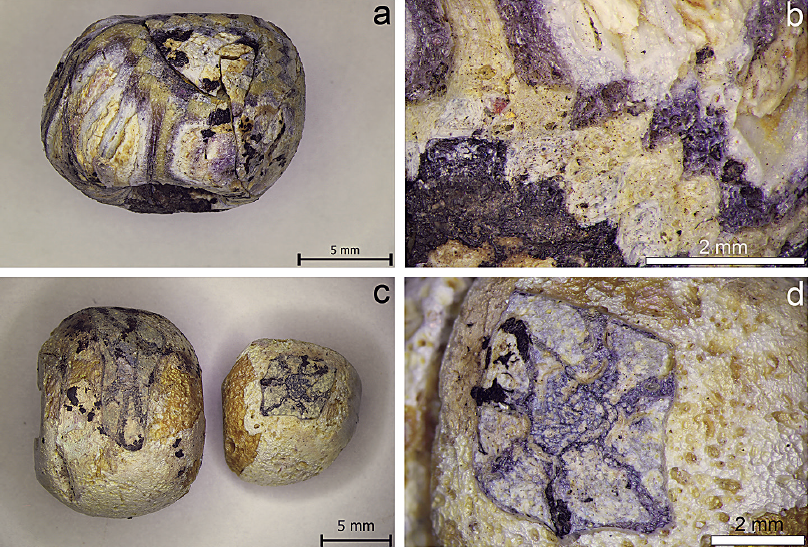
Tento text se zabývá specifickou skupinou nálezů z Čech s výzdobou mozaikového/millefiori emailu nebo skla, které pocházejí z doby římské. Pro účely našeho výzkumu byla vybrána skupina nálezů sestávající z destičkovitých spon, kování římského opasku (balteu), skleněných korálků a jedné pečetní schránky. Všechny patří do široké skupiny římsko-provinciálního importu. Destičkovité spony zdobené millefiori emailem se sice objevují v celé oblasti barbarika, nicméně koncentrují se v Polabí a Potisí. Kruhová kování balteu jsou podstatně vzácnějším artefaktem, přesto v Čechách evidujeme několik nových nálezů. Jak tyto spony, tak i kování balteu se objevují především v období tzv. markomanských válek a v 1. polovině 3. století. Skleněné korálky pak představují typické nálezy v ženských hrobech mladší doby římské. Mozaikové korálky však patří k méně početné skupině skleněných korálků a objevují se obvykle v bohatých ženských hrobech 3. století. Jeden z hlavních cílů této studie je průzkum technologií použitých při výrobě millefiori emailu. Analytické metody micro-XRF, SEM/EDS a LA-ICP-MS byly použity pro stanovení složení skla a kovového podkladu. Konstrukce vybraných skleněných korálků byla prozkoumána počítačovou mikrotomografií (micro-CT).
Stažení
Reference
Adler, H. 1994: KG Ringelsdorf, OG Ringelsdorf-Niederabsdorf, VB Gänserndorf. Fundberichte aus Österreich 33, 583.
Antonaras, A. C. 2012: Fire and sand. Ancient Glass in the Princeton University Art Museum. Princeton University Art Museum.
Bandiera. M. 2022: Technological study and chemical-archaeometric characterization of Roman opaque red glass from opus sectile decoration in the Lucius Verus Villa, 2nd century AD. Lisboa: Faculdade de Ciências e Tecnologia da Universidade Nova de Lisboa. Unpublished PhD thesis.
Bateson, J. D. 1981: Enamel-working in Iron Age, Roman and Sub-Roman Britain. The Products and Techniques. British Archaeological Reports British Series 93. Oxford: British Archaeological Reports.
Bayley, J. 2005: Roman enamel and enamelling: new finds from Castleford, Yorkshire. In: Annales du 16e Congrès de l'Association Internationale pour l'Histoire du Verre, London 2003, Nottingham: AIHV, 72–74.
Basso, E. – Invernizzi, C. – Malagodi, M. – La Russa, M. F. – Bersani, D. – Lottici, P. P. 2014: Characterization of colorants and opacifiers in roman glass mosaic tesserae through spectroscopic and spectrometric techniques. Journal of Raman Spectroscopy 45, 238–245.
Becker, M. – Bemmann, J. – Laser, R. – Leineweber, R. – Schmidt, B. – Schmidt-Thielbeer, E. – Wetzel, J. 2006: Corpus der römischen Funde im europäischen Barbaricum. Deutschland. Band 6. Land Sachsen-Anhalt. Bonn: Dr. Rudolf Habelt Gmbh.
Bemmann, J. – Hahne, G. 1994: Waffenführende Grabinventare der jüngeren römischen Kaiserzeit und Völkerwanderungszeit in Skandinavien. Studie zur zeitlichen Ordnung anhand der norwegischen Funde. Bericht der Römisch-Germanischen Kommission 75, 283–640.
Benea, D. 2004: Die römischen Perlenwerkstätten aus Tibiscum. Timişoara: Excelsior Art.
Benea, D. 2016: Werkstätten für Buntmetallverarbeitungen in der Provinz Dakien. In: H.-U. Voß – N. Müller-Scheeßel (eds.), Archäologie zwischen Römern und Barbaren. Kolloquien zur Vor- und Frühgeschichte 22,1. Bonn: Dr. Rudolf Habelt Gmbh., 777–792.
Blažek, J. 1995: Die jung- und spätkaiserzeitlichen Skelettgräber in Nordwestböhmen. Arbeits- und Forschungsberichte zur sächsischen Bodendenkmalpflege 37, 139–161.
Boschetti, C. – Kindberg Jacobsen, J. – Parisi Presicce, C. – Raja, R. – Schibille, N. – Vitti, M. 2022: Glass in Rome during the transition from late antiquity to the early Middle Ages: materials from the Forum of Caesar. Heritage Science 10, 95.
Böhme, A. 1972: Die Fibeln der Kastelle Saalburg und Zugmantel. Saalburg-Jahrbuch 29, 5–112.
Brems, D. – Degryse, P. 2014: Trace Element Analysis in Provenancing Roman Glass-Making. Archaeometry 56, 116–136.
Bursák, D. – Danielisová, A. – Magna, T. – Pajdla, P. – Míková, J. – Rodovská, Z. – Strnad, L. – Trubač, J. 2022: Archaeometric perspective on the emergence of brass north of the Alps around the turn of the Era. Scientific Reports 12, 374.
Čisťakova, V. – Beneš, Z. 2024: The Vrbová Lhota Settlement – a Case Study of Germanic Elites in the 3rd Century AD in Central Bohemia. Fontes Archaeologici Pragenses 51. Praha: Národní muzeum.
Colomban, P. – Schreiber, H. D. 2005: Raman signature modification induced by copper nanoparticles in silicate glass. Journal of Raman Spectroscopy 36, 884–890.
Derks, T. – Roymans, N. 2002: Seal-boxes and the spread of latin literacy in the Rhine delta. In: A. E. Cooley (ed.), Becoming Roman, writing Latin? Journal of Roman Archaeology, Supplementary Series 48. Portsmouth, R.I.: IRA, 87–134.
Droberjar, E. 2016: Römische Fibeln aus Gräbern und Siedlungen des 1.–3. Jahrhunderts in Böhmen – eine Übersicht. In: H.-U. Voß – N. Müller-Scheeßel (eds.), Archäologie zwischen Römern und Barbaren. Kolloquien zur Vor- und Frühgeschichte 22. Bonn: Dr. Rudolf Habelt Gmbh., 495–510.
Droberjar, E. – Frána, J. 2004: Antická mosaz (aurichalcum) v českých nálezech časné doby římské. Archeologie ve středních Čechách 8, 441–462.
Droberjar, E. – Motyková, K. 2023: Třebusice. Žárové pohřebiště z doby římské ve středních Čechách. Díl I. Archeologické prameny. Spisy Archeologického ústavu AV ČR Brno 76. Brno – Nitra: Archeologický ústav AV ČR, Brno, v. v. i. – Archeologický ústav SAV, v. v. i.
Dušek, S. – Becker, M. – Eberhartd, I. – Grasselt, T. – Heising, A. – Künzel, H. – Peschel, K. – Schlapke, M. – Seidel, M. 2017: Corpus der römischen Funde im europäischen Barbaricum. Deutschland. Band 8,1. Freistaat Thüringen. Teil 1: Südharzvorland, Saale-Elster-Region, Thüringer Wald. Wiesbaden: Dr. Ludwig Reichert Verlag.
Ettlinger, E. 1973: Die römischen Fibeln in der Schweiz. Bern: Francke Verlag.
Exner, K. 1941: Die provinzialrömischen Emailfibeln der Rheinlande. Bericht der Römisch-Germanischen Kommission 29, 31–121.
Feugère, M. 1985: Les fibules en Gaule méridionale de la conquête à la fin du Ve siècle après J.-C. Revue archéologique de Narbonnaise Supplément 12. Paris: Éditions du Centre National de la Recherche Scientifique.
Freestone, I. C. 2021: Glass production in the first millennium CE: a compositional perspective. In: F. Klimscha – H. J. Karlsen – S. Hansen – J. Renn (eds.), Glas und Glasproduktion in Ur- und Frühgeschichtlicher Zeit. Berlin Studies of the Ancient World 67. Berlin: Edition TOPOI, 245–263.
Freestone, I. – Stapleton, C. P. 2015: Composition technology and production of coloured glasses from Roman mosaic vessels. In: L. Bayley – I. C. Freestone – C. Jackson (eds.), Glass of the Roman World. Oxford: Oxbow, 61–76.
Furger, A. R. – Wartmann M. – Riha, E. 2009: Die römischen Siegelkapseln aus Augusta Raurica. Forschungen in Augst 44. Augst: Augusta Raurica.
Gedzevičiūtė, V. – Welter, N. – Schüssler, U. – Weiss, C. 2009: Chemical composition and colouring agents of Roman mosaic and millefiori glass, studied by electron microprobe analysis and Raman microspectroscopy. Archaeological and Anthropological Science 1, 15–29.
Giumlia-Mair, A. 2020: Plating and Surface Treatments on Ancient Metalwork. Advances in Archaeomaterials 1, 1–26.
Gopkalo, O. V. 2008: Busy i podveski chernyachovskoy kultury. Kyjiv: Institut archeologiji NAN Ukrajiny.
Gratuze, B. – Pactat, I. – Schibille, N. 2018: Changes in the Signature of Cobalt Colorants in Late Antique and Early Islamic Glass Production. Minerals 8, 225.
Grumeza, L. 2015: Cloisonné Brooches Discovered in Banat (Beginning of the Second Century A.D. – Last Third of the Third Century A.D.). Ziridava Studia Archaeologica 29, 191–214.
Henderson, J. 1991: Technological characteristics of Roman enamels. Jewellery Studies 5, 65–76.
Henderson, J. 2013: Ancient Glass: An Interdisciplinary Exploration. New York: Cambridge University Press.
Hložek, M. – Komoróczy, B. – Trojek, T. 2015: Techniky emailu v archeologii a jejich identifikace metodami SEM-EDX, XRF a micro-XRF. In: A. Selucká (ed.), Výzdobné techniky kovů II. Brno: Metodické centrum konzervace – Technické muzeum v Brně, 39–50.
Humer, F. (ed.) 2009: Von Kaisern und Bürgern. Antike Kostbarkeiten aus Carnuntum. Ausstellungskatalog. Wien: Amt d. NÖ Landesregierung.
Jílek, J. – Horník, P. 2017: Výzbroj a výstroj z doby římské ve východním Polabí. Hroby bojovníků a jejich interpretace. Študijné zvesti Archeologického ústavu SAV 62, 61–100.
Jobst, W. 1975: Die römischen Fibeln aus Lauriacum. Forschungen in Lauriacum 10. Linz: Oberösterreichisches Landesmuseum.
Kaczanowski, P. 1992: Bemerkungen zur Chronologie des Zustroms römischer Waffenimporte in das europäische Barbaricum. In: K. Godłowski – R. Madyda-Legutko (eds): Probleme der relativen und absoluten Chronologie ab Latènezeit bis zum Frühmittelalter. Kraków: Uniwersytet Jagielloński – Instytut archeologii, 171–186.
Koch, U. 2001: Das alamannisch-fränkische Gräberfeld bei Pleidelsheim. Forschungen und Berichte zur Vor- und Frühgeschichte in Baden-Württemberg 60. Stuttgart: Landesdenkmalamt Baden-Württemberg – Konrad Theiss Verlag.
Kolník, T. 1965: K typológii a chronológii niektorých spôn z mladšej doby rímskej na juhozápadnom Slovensku. Slovenská archeológia 13, 183–236.
Kysela, J. 2020: Things and Thoughts. Central Europe and the Mediterranean in the 4th–1st centuries BC. Studia Hercynia, monographs 1. Praha: Univerzita Karlova.
Leineweber, R. 2021: Zethlingen – ein Brandgräberfeld der spätrömischen Kaiserzeit aus der Altmark. Die Ausgrabungen der Jahre 1978–1988. Veröffentlichungen des Landesamtes für Denkmalpflege und Archäologie Sachsen-Anhalt – Landesmuseum für Vorgeschichte 83. Halle (Saale): Landesamt für Denkmalpflege und Archäologie Sachsen-Anhalt – Landesmuseum für Vorgeschichte.
Lutovský, M. et al. 2023: Terénní výzkumy Ústavu archeologické památkové péče středních Čech v roce 2022. Archeologie ve středních Čechách 27, 655–690.
Mączyńska, M. – Urbaniak, A. 2006: Prowincjonalnorzymska zapinka tarczowata z cmentarzyska kultury wielbarskiej w Babim Dole-Borczu, pow. kartuski. Wiadomości archeologiczne 58, 145–158.
Meyer, E. 1969: Das germanische Gräberfeld von Zauschwitz, Kr. Borna. Arbeits- und Forschungsberichte zur sächsischen Bodendenkmalpflege Beiheft 6. Berlin: VEB Deutscher Verlag der Wissenschaften.
Moretti, C. – Hreglich, S. 2013: Raw materials, recipes and procedures used for glass making. In: K. Janssens (ed.), Modern methods for analysing archaeological and historical glass. Chichester: John Wiley & Sons, Ltd., 23–47.
Musil, J. 1994: Römische Waffen und Rüstung aus Böhmen. Památky archeologické 85, 5–14.
Nowakowski, W. 2001: Corpus der römischen Funde im europäischen Barbaricum. Polen. Band 1. Masuren. Warszawa: Institut für Archäologie der Warschauer Universität.
Oldenstein, J. 1976: Zur Ausrüstung römischer Auxiliareinheiten. Studien zu Beschlägen und Zierat an der Ausrüstung der römischen Auxiliareinheiten des obergermanisch-raetischen Limesgebietes aus dem zweiten und dritten Jahrhundert n. Chr. Bericht der Römisch-Germanischen Kommission 57, 49–284.
Pelpel, L. – Vernou, Ch. 2019: Vases émaillés d’époque romaine de la vallée de la Saône. Revue archéologique de l’Est, Tome 67, 249–266.
Píč, J. L. 1892: Žárové hroby na Třebické u Dobřichova z doby císařství římského. Památky archaeologické a místopisné 15, 561–598.
Píč, J. L. 1903: Čechy na úsvitě dějin. Svazek 2. Hradiště u Stradonic jako historické Marobudum. Starožitnosti země České díl II, sv. 2. Praha: J. L. Píč.
Pleinerová, I. 1995: Opočno. Ein Brandgräberfeld der jüngeren und späten Kaiserzeit in Nordwestböhmen. Kraków: Instytut archeologii Uniwersytetu Jagiellońskiego.
Preidel, H. 1930: Die germanischen Kulturen in Böhmen und ihre Träger. Erster Band: Die Kulturen. Kassel/Wilhelmshöhe: Johannes Stauda.
Price, J. 2002: Two Vessels from Llandovery, Carmarthenshire, and Piercebridge, County Durham: A Note on Flavian and later Polychrome Mosaic Glass in Britain. In: M. Aldhouse-Green – P. Webster (eds.), Artefacts and Archaeology. Aspects of the Celtic and Roman World. Cardiff: University of Wales Press, 112–131.
Przybyła, M. J. 2010: Bemerkungen zu einigen lokalen Formen der Schwertgürtelschliessen vom sog. Balteus-Typ aus dem Barbaricum. Recherches Archéologiques NS 2, 93–184.
Rehren, T. 2002: Metallanalysen an römischen Fibeln aus der CUT. In: U. Boelicke, Die Fibeln aus dem Areal der Colonia Ulpia Traiana. Xantener Berichte 10. Mainz: Verlag Philipp von Zabern, 146–147.
Reszczyńska, A. 2017: Destičkovitá spona ve tvaru kance z Trmic – Ústí nad Labem v kontextu obdobných nálezů. In: E. Droberjar – B. Komoróczy (eds.), Římské a germánské spony ve střední Evropě (Archeologie barbarů 2012). Spisy Archeologického ústavu AV ČR Brno 53. Brno: Archeologický ústav AV ČR, Brno, v. v. i., 339–345.
Rey-Vodoz, V. 1986: Les fibules gallo-romaines de Martigny VS. Jahrbuch der Schweizerischen Gesellschaft für Ur- und Frühgeschichte 69, 149–198.
Riederer, J. 1998: Ergebnisse der Atomabsorptionsspektralanalyse zur Materialauswahl in der Antike. In: H. U. Voss – P. Hammer – J. Lutz (eds.), Römische und germanische Bunt- und Edelmetallfunde im Vergleich. Archäometallurgische Untersuchungen ausgehend von elbgermanischen Körpergräbern. Bericht der Römisch-germanischen Kommission 79. Darmstadt/Mainz: Verlag Philip von Zabern, 200–203.
Riha, E. 1979: Die römischen Fibeln aus Augst und Kaiseraugst. Forschungen in Augst 3. Augst: Amt für Museen und Archäologie des Kantons Basel-Landschaft.
Riha, E. 1994: Die römischen Fibeln aus Augst und Kaiseraugst. Die Neufunde seit 1975. Forschungen in Augst 18. Augst: Römermuseum Augst.
Rybová, A. 1979: Plotiště nad Labem. Eine Nekropole aus dem 2–5. Jahrhundert u. Z. I. Teil. Památky archeologické 70, 353–489.
Rybová, A. 1980: Plotiště nad Labem. Eine Nekropole aus dem 2.–5. Jahrhundert u. Z. II. Teil. Památky archeologické 71, 93–224.
Sakař, V. 1970: Roman imports in Bohemia. Fontes Archaeologici Pragenses 14. Pragae: Museum nationale Pragae.
Sáró, C. 2020: The fibula production of Brigetio: clay moulds. Dissertationes Archaeologicae ex Instituto Archaeologico Universitatis de Rolando Eötvös nominatae Ser. 3. No. 8, 117–140.
Schibille, N. – Boschetti, C. – Valero Tévar, M. Á. – Veron, E. – de Juan Ares, J. 2020: The Color Palette of the Mosaics in the Roman Villa of Noheda (Spain). Minerals 10, 272.
Schibille, N. – Neri, E. – Ebanista, C. – Mohamed Ramzi, A. – Bisconti, F. 2018: Something old, something new: the late antique mosaics from the catacomb of San Gennaro (Naples). Journal of Archaeological Science: Reports 20, 411–422.
Schibille, N. – Sterrett-Krause, A. – Freestone, I. C. 2017: Glass groups, glass supply and recycling in late Roman Carthage. Archaeological and Anthropological Science 9, 1223–1241.
Skorupka, T. 2001: Kowalewko 12. Cmentarzysko birytualne ludności wielbarskiej (od połowy I w. n.e. do początku III w. n.e.). Archeologiczne badania ratownicze wzdłuż trasy gazociągu tranzytowego. Tom II Wielkopolska. Poznań: Wydawnictwo poznańskie.
Svoboda, B. 1948: Čechy a římské Imperium. Sborník Národního musea v Praze svazek II – A – historický. Praha: Národní museum v Praze.
Tempelmann-Mączyńska, M. 1985: Die Perlen der römischen Kaiserzeit und der frühen Phase der Völkerwanderungszeit in mitteleuropäischen Barbaricum. Römisch-germanische Forschungen 43. Mainz am Rhein: Verlag Philipp von Zabern.
Thierry N. 1962: A propos d'une nouvelle pyxide d'époque romaine à décor d'émail «millefiori». Antike Kunst 5, 65–68.
Thomas, S. 1966: Die provinzialrömischen Scheibenfibeln der römischen Kaiserzeit im freien Germanien. Berliner Jahrbuch für Vor- und Frühgeschichte 6, 119–178.
Urbanová, M. 2015: Průřez dějinami smaltu a nástin jeho současné podoby ve volné umělecké tvorbě. In: A. Selucká (ed.), Výzdobné techniky kovů II. Brno: Metodické centrum konzervace – Technické muzeum v Brně, 21–38.
von Uslar, R. 1938: Westgermanische Bodenfunde des ersten bis dritten Jahrhunderts nach Christus aus Mittel- und Westdeutschland. Germanische Denkmäler der Frühzeit 3. Berlin: Walter de Gruyter & Co.
Vaday, A. 2003: Cloisonné brooches in the Sarmatian Barbaricum in the Carpathian Basin. Acta Archaeologica Academiae Scientiarum Hungaricae 54, 315–421.
Vandini, M. – Fiorentino, S. 2020: From Crystals to Color: A Compendium of Multi-Analytical Data on Mineralogical Phases in Opaque Colored Glass Mosaic Tesserae. Minerals 10, 609.
Venclová, N. – Hulínský, V. – Jonášová, Š. – Frána, J. – Fikrle, M. – Vaculovič, T. 2015: Hellenistic mosaic glass vessels in Bohemia and Moravia. Archeologické rozhledy 67, 213–238.
Vích, D. – Jílek, J. – Kmošek, J. – Biborski, M. J. – Biborski, M. R. – Martínek, J. 2020: Soubor kovových předmětů z doby římské z Boršova na Moravskotřebovsku. Památky archeologické 111, 159–192.
Wedepohl, K. H. 2003: Glass in Antike und Mittelalter. Geschichte eines Werkstoffs. Stuttgart: E. Schweizerbart´sche Verlagsbuchhandlung.
Zlámalová Cílová, Z. – Gelnar, M. – Randáková, S. 2021: Trends in Colouring Blue Glass in Central Europe in Relation to Changes in Chemical Composition of Glass from the Middle Ages to Modern Age. Minerals 11, 1001.
Stahování
Další soubory
Publikováno
Jak citovat
Číslo
Sekce
Kategorie
Licence
Copyright (c) 2025 Viktoria Čisťakova, Zdeněk Beneš, Zuzana Zlámalová Cílová, Pavel Horník, Šárka Msallamová, Šárka Matoušková, Ladislav Lapčák, Tomáš Kmječ, Josef Souček

Tato práce je licencována pod Mezinárodní licencí Creative Commons Attribution 4.0 .